


In sports, the gap between a good team and a great one often comes down to how well they talk to each other. Effective communication is key to focus, whether in games, practices, or team talks. It’s not just about saying words; it’s about creating a space where everyone feels free to share and ask.
Poor communication can really hurt a team’s performance. It can lead to lost productivity and low morale. Clear, simple, and caring talks are essential. When athletes and coaches get each other’s feelings and meanings, they can do better and stay focused, even when it’s tough.
In this article, we’ll look at how to use team talks to your advantage. We’ll cover everything from game-day chats to off-field discussions. We’ll also share lessons from top teams to help you improve your team’s dynamics and performance.
The Role of Communication in Focus
Effective communication is key to keeping a team focused. When players and coaches talk clearly, it helps them stay sharp, even when it’s tough. This is where reflective communication plays a big role.
By listening well, repeating back what they heard, and checking if they got it right, coaches make athletes feel understood. This makes athletes more focused on the task.
For example, when a coach repeats back what a player said, it builds a connection. This connection helps athletes stay focused on the task, not worries. Also, when players repeat back what they heard or ask for more info, it keeps everyone on the same page.
But, stress and too much emotion can mess with focus, like in close games. Coaches can help by staying calm and clear in their communication. For instance, a point guard might share a coach’s plan with the team during a timeout.
Or, a quarterback might use a steady rhythm to calm the offense. This helps everyone stay calm, even in the midst of chaos.
The main point is, staying focused is a team effort. It’s all about the communication between coaches and players. By creating an open dialogue, teams can improve their focus and play better together. To learn more, check out this introduction to tournament game strategy.
In-Game vs. Off-Game Communication
It’s key to know the difference between in-game and off-game talk for a team to do well. In a game, communication needs to be fast and clear. Players use non-verbal cues like hand signals and eye contact to send messages quickly. This player-coach talk often includes direct commands and codes that help them stay focused.
But off the field, communication is different. Coaches and players have deep talks during video reviews. They analyze game decisions and grow together in one-on-one meetings.
Team huddles are important for building trust. They let players share their thoughts and feelings openly. This helps the team work together better.
Great teams know how to switch between these communication styles. They use synchronous methods like talking in real-time during games. And asynchronous methods like video clips and messages for after-game talks. Knowing when to be direct or when to listen is important for success.
| Type of Communication | In-Game | Off-Game |
|---|---|---|
| Style | Assertive, quick | Reflective, analytical |
| Tools | Hand signals, eye contact | Video reviews, meetings |
| Focus | Execution | Growth |
| Communication Type | Verbal, non-verbal | Verbal, written |
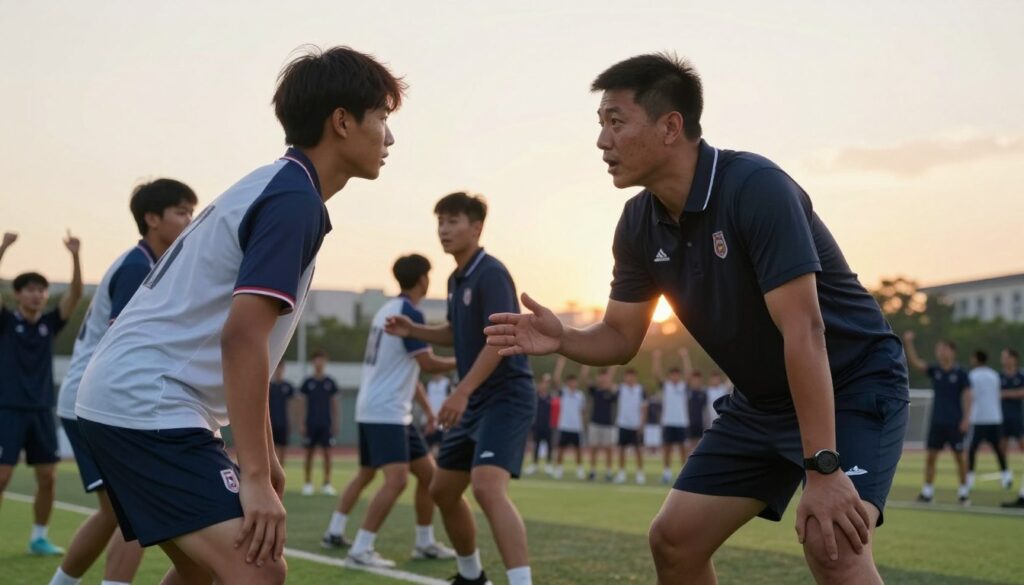
Common Mistakes and Fixes
Teams often fall into communication traps that mess with their focus. These problems come from stress, not paying attention, and bad body language. Knowing these mistakes is the first step to getting better.
Mistake 1: Coaches sometimes say things like “Play harder!” without being clear. This makes players unsure of what to do. Fix: Speak clearly and simply. Then, ask, “What’s your read?” This makes sure everyone knows what to do.
Mistake 2: Players might seem to listen but are really not. This doesn’t get them fully involved. Fix: Teach them to listen actively. Ask them to repeat back what they heard, so they really get it.
Mistake 3: Bad body language, like crossed arms or eye-rolling, can go against what coaches say. This can hurt trust in the team. Fix: Make sure body language matches words. Coaches should show open body language and keep eye contact steady.
Mistake 4: Stress can make communication worse during important times, leading to quick, emotional words. Fix: Start a “pause and breathe” ritual before talking. This helps calm the situation.
Studies show stress can make us less focused. Simple tricks like squeezing a fist or deep breathing can help a lot. By spotting these issues and fixing them, teams can improve their focus and do better overall.

Best Practices from Top Teams
Championship-winning teams know that good communication is key. They don’t just hope for it; they work hard to make it happen. This creates a culture of excellence.
They start by setting clear expectations for when and how players talk to coaches. For instance, many teams have a 24-hour rule before talking about playing time. This helps keep emotions in check. They also pick the best way to send messages—text for details and face-to-face for feedback.
Another important thing is making feedback a two-way street. Coaches like Steve Kerr make sure players have a say in film sessions. This turns one-way talks into real conversations. It makes players feel valued and more committed to the team.
Top teams also celebrate small victories. Recognizing a good defensive play in huddles keeps players focused on the journey, not just the end result. This builds a culture of appreciation and encourages players to keep getting better.
Regular one-on-one meetings are also key. These meetings let coaches talk about personal issues before they get big. It’s like a quarterback coach reviewing plays privately. This keeps the team focused and in sync.
Using technology is another smart move. Teams use video platforms, instant messaging, and virtual whiteboards. This tech helps improve coach/player communication and keeps everyone up to date.
Lastly, they handle conflicts quickly and with respect. Top teams deal with disagreements right away, using methods like the “Five Whys” to find the real problem. This makes staying focused a team effort, not a constant fight.
By following these best practices, teams can build a communication system that boosts focus and success. For more tips on improving communication, see this guide for coaches and players.
Tools and Drills You Can Use
Good communication is key for any team wanting to do well. Coaches can make player-coach talk better with practical tools and drills. Start by using tech like Zoom or Microsoft Teams for online meetings. These tools help everyone talk in real time.
Use drills to improve communication skills when it matters most. The “Echo Drill” makes players repeat what they’re told, improving listening. The “Blindfold Obstacle Course” is another great drill. It makes players trust and communicate clearly by guiding a blindfolded teammate.
Try the “Pressure Huddle” for a tougher challenge. It’s when a coach gives out complex plays in a loud setting. This drill helps players stay focused and use non-verbal signals even with distractions.
Use Hudl for video reviews to give feedback later. Shared digital playbooks keep everyone on the same page. Simple things like a team communication charter or a “focus cue” word can also help.
Practice regularly to get better. Start with one drill or tool and add more as you go. By making these exercises part of your training, you can turn good communication into a winning edge.