


In the world of sports, challenges are common. Athletes face moments that shake their confidence, like not starting a game or injuries. These moments can feel like personal failures. It’s key to know how to bounce back well.
Winning teams understand that success comes from learning to recover, not just from winning. They see setbacks as chances to grow and improve.
Crystal Dunn’s story after being cut from the 2015 World Cup team is inspiring. She turned her disappointment into a chance to learn and get better. This shows that setbacks can lead to success.
It’s important for athletes to not let their self-worth depend on their performance. Viewing losses as lessons can change how they face future challenges. By focusing on the positives and learning from each experience, athletes build resilience.
This article will look at the mental and tactical strategies of elite teams. They use these to deal with disappointment and come back stronger. The path to resilience is about growing and persevering, not just bouncing back.
To learn more about how to recover from loss, check out this resource: how resiliency can help you overcome.
Recognizing Types of Setbacks
Setbacks in sports can happen in many ways. They affect a team’s mood and how well they play. It’s key for athletes and coaches to know about these setbacks. Here are some common ones:
- Critical Loss: A tough defeat in a knockout round can really get players down.
- Injury to Key Players: When a star player gets hurt, it can mess up the team’s flow and success.
- Controversial Officiating: A bad call can make players upset and resentful.
- Sudden Drop in Form: When performance drops, it can make players doubt themselves and feel anxious.
Dealing with these setbacks can make athletes think negative thoughts. They might overthink, feel resentful, or be too hard on themselves. It’s okay to feel these ways when facing tough times.
For example, being left out of the game or cut from a team can make someone feel not good enough. Getting less playing time can also make athletes question their skills. Recognizing these issues is the first step to getting better.
By knowing what kind of setback they face, athletes can start to deal with their emotions. Understanding these feelings makes it easier to move past them.
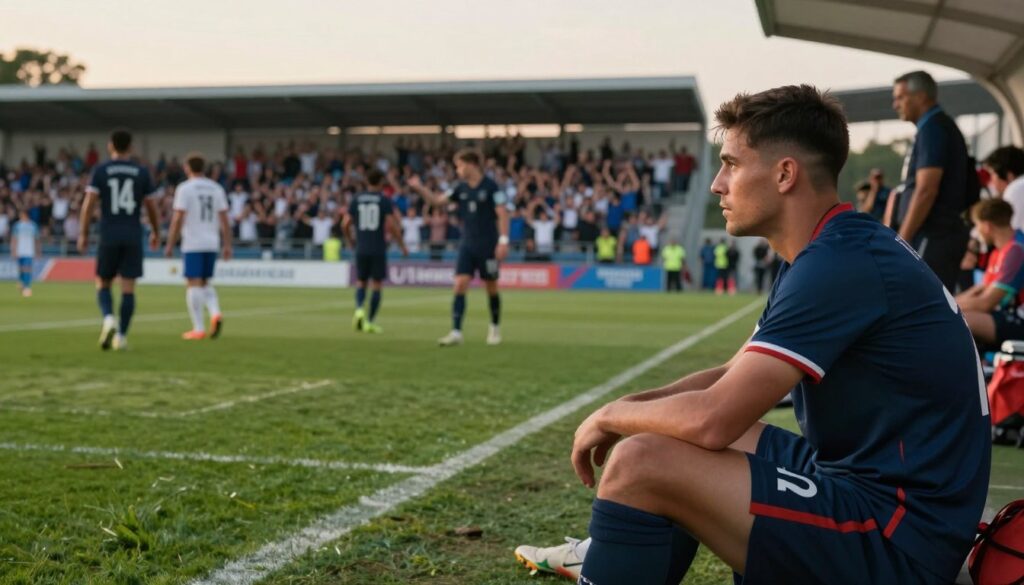
Emotional & Tactical Recovery Strategies
To bounce back from setbacks, teams need to mix emotional awareness with tactical analysis. First, it’s important to acknowledge your disappointment. Give yourself time to feel your emotions. You can do this by walking, journaling, or practicing breathing exercises.
After you’ve processed your emotions, it’s time for a performance review. Ask yourself, “What can I learn?” and “What one adjustment can I make?”. Don’t dwell on every mistake. Focus on learning one or two key lessons. This helps keep your self-worth separate from the outcome, which is key for athlete resilience.
Getting trusted feedback is also important. Talk to coaches or teammates about what you can improve. Ask specific questions like, “What specific things can I work on?”. This encourages growth and improves the team’s culture.
Self-reflection is vital too. Think about your intensity, movement, awareness, work ethic, and attitude during the game. These questions help you see where you can get better. Talking to a coach with specific questions can be very helpful.
By balancing emotional regulation with tactical analysis, teams can turn losses into learning experiences. This recovery process helps teams recover quickly and builds athlete resilience for future challenges.
Famous Comebacks in History
In every sport, there are moments when defeat sparks incredible comebacks. These stories inspire athletes and fans, showing that setbacks can lead to greater achievements. Crystal Dunn is a great example. She was cut from the 2015 USWNT World Cup roster but didn’t let it stop her.
Instead, Dunn won the NWSL MVP, made the Olympic team, and played for Chelsea. Her biggest win was in 2019, when she became a World Cup champion. Her husband called this setback a “blessing,” showing how despair can lead to success.
Other iconic comebacks in sports history share Dunn’s story. The 2004 Boston Red Sox came back from a 3-0 deficit in the ALCS to win the World Series. The 2016 Cleveland Cavaliers also made history by overcoming a 3-1 deficit in the NBA Finals to win the championship. These stories show that recovering from loss is a common theme in sports.
Below is a table summarizing these famous comebacks:
| Event | Year | Team/Athlete | Outcome |
|---|---|---|---|
| USWNT World Cup | 2019 | Crystal Dunn | World Champion |
| ALCS | 2004 | Boston Red Sox | World Series Champions |
| NBA Finals | 2016 | Cleveland Cavaliers | NBA Champions |
These athletes and teams hit their lowest points but came back stronger. Their stories remind us that setbacks are not the end but a chance to grow and achieve greatness.

The Coach’s Role in Recovery
Coaches are key in helping teams bounce back from setbacks. Their actions can either lift spirits or add to the challenges. How a coach reacts to a loss can greatly influence the team’s recovery.
Creating a safe space for open talk is vital. This lets players share their feelings and worries. Here are some ways coaches can help:
- Encourage Open Communication: Encourage players to ask questions, like, “Can you help me understand why I did not start?” This shows the coach values their thoughts.
- Provide Constructive Feedback: Giving specific advice helps players improve. For example, saying, “What specific things can I work on?” encourages growth.
- Allow Time for Emotions: Waiting 24 hours before discussing can lead to better talks. It helps players calm down first.
Using these methods, coaches can help players see they are more than their results. This is key for emotional healing and growth.
For more tips on handling setbacks, check out dealing with athletic setbacks or learning when to adjust tactics.
Building Long-Term Team Resilience
True athlete resilience is more than just bouncing back. It’s about seeing challenges as chances to grow. Teams that welcome difficulties in their training build mental strength.
They see every loss as a lesson. This view shifts focus from winning to effort, preparation, and attitude.
Building a resilient team culture needs regular practice of mental skills. Self-reflection and controlling emotions are essential. Teams should see hurdles as steps forward, not blocks.
This mindset helps athletes deal with pressure better. The more they face challenges, the stronger they get.
By making these principles part of daily life, teams share a common belief. They understand that facing struggles is key to getting better. This resilience turns the team into a united force, ready for any challenge.
Teams focused on building resilience will not only bounce back from losses. They will become mentally stronger. This journey to resilience is continuous, needing commitment and a proactive mindset.
The rewards are clear: stronger teams, better performance, and success in all areas of life.