

In the world of competitive sports, pressure is a constant. The ability to stay calm and perform well under stress is key. It’s not just about being physically strong; it’s also about being mentally tough. Staying focused when it matters most is a skill that can be learned.
TrainEffective says athletes need to master the basics first, before they can handle pressure. This means practicing skills consistently. If they can’t do the basics without stress, how can they do them when it counts?
Studies in sports psychology back this up. They show that mental skills are just as important as physical ones as athletes get better. By working on mental preparation, teams can create a place where players excel, even when things get tough.
Understanding Pressure in Tournaments
The pressure in tournaments is intense. Athletes face many challenges that affect their tournament concentration. Sports psychology helps by teaching two main strategies: problem-focused coping and emotion-focused coping.
Problem-focused coping means getting ready for pressure by making a plan. Athletes can control things like their strategy or physical condition. Emotion-focused coping is about changing how athletes feel and react to pressure. Techniques like visualization or breathing exercises can help manage anxiety.
A study by Kremer, Moran, and Kearney (2019) shows that feeling nervous before a game is not bad. It means the game is important to the athlete. The key is to stay calm and perform well, even with nerves.
Top teams learn to accept and use the energy of nervousness. This way, they improve their tournament concentration instead of letting it distract them. They focus on the excitement of the game, not just the anxiety of performing.
It’s important to know that different situations require different mental approaches. For example, the nerves in early rounds are different from those in critical games. Knowing this helps athletes prepare their minds better.
| Pressure Scenario | Focus Demand | Recommended Strategy |
|---|---|---|
| Early-Round Jitters | Low to Moderate | Breathing Exercises |
| Mid-Tournament Pressure | Moderate | Visualization Techniques |
| Elimination Game | High | Problem-Focused Planning |
Using these strategies, athletes can manage their minds better in tournaments. For more tips on handling pressure, check out this resource.
Focus Drills and Mindset Training
Building athlete focus is key for success in tough situations. Athletes need to stay focused on their tasks, ignoring distractions. This skill is like a spotlight, helping them zoom in or out as needed.
There are four types of focus: narrow/internal, broad/internal, narrow/external, and broad/external. For example, a broad/external focus is key for reading plays in team games. On the other hand, a narrow/internal focus is important during a marathon’s final stretch. Knowing when to switch between these states is essential for better performance.
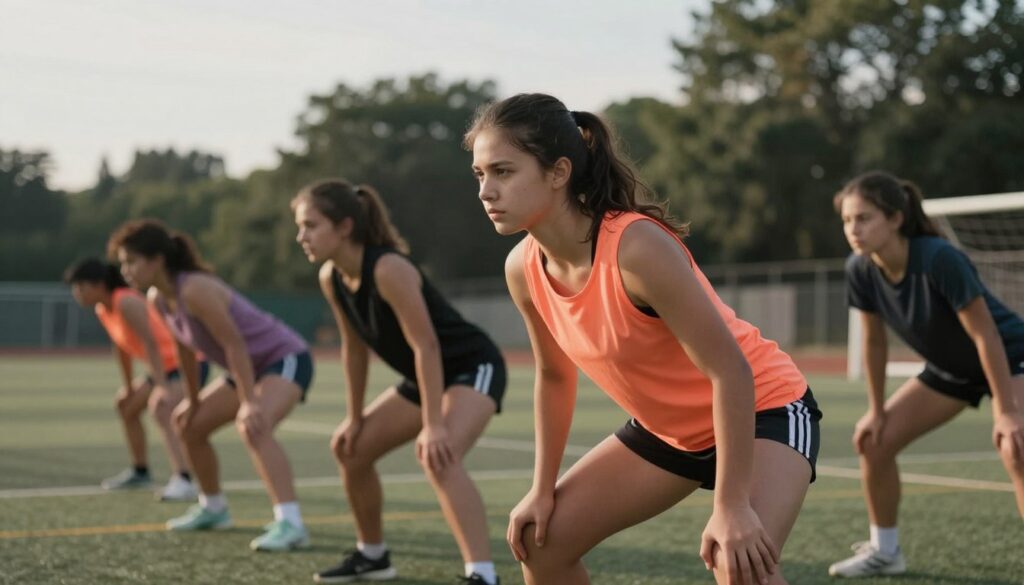
Teams use special drills to improve focus skills. These drills help athletes move between different focus states, even when tired. For instance, positive self-talk can boost endurance, as shown by Meijen (2019).
The train it–trust it process from Rotella and Cullen (2004) is also important. It teaches athletes to practice their skills and trust them during games. This cycle is vital for peak performance.
Mental toughness can be built through four key elements: control, commitment, challenge, and confidence. Each can be strengthened with specific methods. This ensures athletes are ready for competition’s pressures.
In summary, athlete focus is a set of skills that can be trained. By adding focus drills and mindset training to their routines, athletes can perform better under pressure. For more on drills, see why drills matter.
Pre-Game Routines to Enhance Attention
Having a pre-game routine can really help an athlete stay focused. These routines help athletes move from thinking to doing. They reduce stress and make decisions easier before a game.
Visualization is a key technique. Athletes imagine themselves in the game, feeling confident and in control. They also think about how others see them, as calm and determined. This mental prep gets them ready for the game.
Controlled breathing is also important. It helps calm nerves, improves blood flow, and sharpens focus. The 4-4-8 method is a good way to breathe:
| Step | Action | Duration |
|---|---|---|
| 1 | Inhale deeply | Count 1 to 4 |
| 2 | Hold breath | Count 1 to 4 |
| 3 | Exhale fully | Count 1 to 8 |
| 4 | Repeat | Four times |
This breathing helps calm the nerves and boosts energy. Team routines also help focus. When teams do the same rituals, they get in sync, improving their game.
Even amateur teams use these routines in tournaments. They make sure athletes stay focused, no matter the situation. With good pre-game routines, teams can perform better under pressure.
Case Examples
Real-life examples from sports history show how athletes handle pressure and improve their game. Roger Bannister’s record-breaking four-minute mile in 1954 is a prime example. It was seen as impossible at the time. Now, over 20 U.S. runners achieve this feat yearly, proving mental and physical training can break barriers.
Billie Jean King saw pressure as a chance to grow. She turned challenges into opportunities to shine. This mindset change is a lesson for all, showing how to turn anxiety into drive.
Victoria Garrick, a volleyball star, battled depression and anxiety. With a sports psychologist’s help, she learned to manage her mental health. She now teaches others about the vital role of mental health in sports, proving even top athletes face mental hurdles.
Amateur soccer teams use narrow focus during penalty shootouts to improve their game. Basketball teams, on the other hand, use broad focus during fast breaks. This allows them to stay alert while executing plays.
Endurance athletes use self-talk to stay focused. This mental technique helps them overcome physical limits and stay dedicated to their goals. These examples show that the strategies discussed are not just ideas but proven methods used in real competitions.
Takeaways for Teams and Individuals
Knowing how to stay focused under pressure is key for winning in tournaments. The GROW Coaching Model helps build mental toughness. It guides athletes to find areas to improve and plan for challenges.
As Gary Mack says, mental skills are as important as physical ones at the top levels. Being motivated from within helps athletes stay committed. Focusing on the joy of getting better keeps them dedicated, not just external rewards.
Teams should practice basics in calm times before facing high-pressure games. Knowing when to use problem-solving or emotional coping is important. Athletes can switch between four focus states to meet game needs.
Building strong pre-game routines and using positive self-talk helps stay focused. For more tips on managing resources and staying calm, check out this guide. Staying focused is a continuous effort that needs dedication and practice. With the right strategies, any team can improve their focus under pressure.