

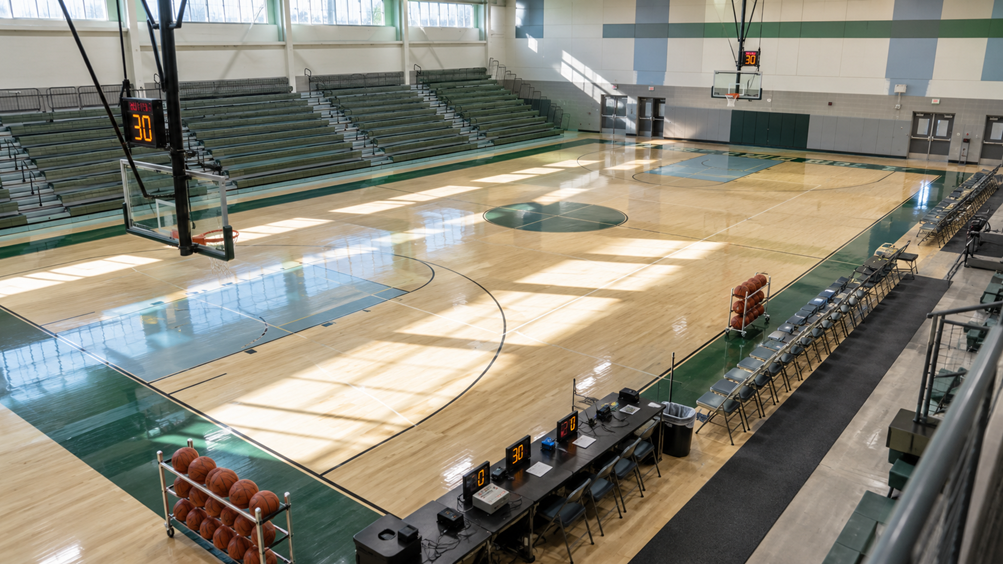
Texas high school basketball enters the 2026-27 school year with a rules experiment that could alter tournament pace without changing the core identity of the sport. State sports environments can operate under very different policy frameworks, as readers comparing those differences can see in Hawaii’s betting rules, but the change that matters inside Texas gyms is much closer to the floor: the University Interscholastic League has approved an optional 35-second shot clock pilot for varsity basketball tournaments and showcases when participating coaches mutually agree to use it.
The pilot gives Texas coaches, players and tournament directors a controlled setting to see how a possession clock affects offensive organization, late-possession decision-making, defensive pressure and event operations. It does not amount to a blanket shot-clock mandate across UIL basketball. That distinction matters. District games are not suddenly becoming clock-driven contests across the state, and tournament organizers cannot simply assume every matchup will use the new format.
What Texas gets instead is a testing ground. For a state with hundreds of basketball programs spread across six conferences, that may produce more useful information than forcing a statewide change before schools, officials and facilities have worked through the practical details.
What The UIL Shot Clock Pilot Actually Allows
The UIL 2026-27 rule changes describe a pilot allowing an optional 35-second shot clock in all conferences for varsity tournaments and showcases when coaches mutually agree. The rule changes took effect August 1, 2026, placing the pilot directly into preparations for the coming season.
That wording creates several boundaries.
The clock is tied to varsity tournaments and showcases. Its use depends on agreement rather than a statewide requirement. It applies across UIL conferences, giving programs from 1A through 6A a potential opportunity to experience clock-managed basketball without making the format part of every regular-season contest.
That structure could make November and December tournaments unusually valuable for coaches. Early-season events already provide chances to evaluate rotations, defensive combinations, ballhandling depth and responses to unfamiliar opponents. A shot clock adds another variable.
Teams that prefer long possessions may have to initiate offense earlier. Guards may have less freedom to reset multiple times. Defenses could become more aggressive late in the count, knowing that a possession cannot continue indefinitely. Coaches may begin paying closer attention to how quickly their teams flow from transition into half-court actions.
None of those changes guarantees faster or better basketball. A 35-second clock still gives an offense considerable time to organize. Its bigger influence may appear during possessions that stall, particularly late in close games when teams might otherwise hold the ball or force opponents to foul.
Why Tournament Coaches May Learn More Than The Score Shows
Tournament basketball often compresses several games into a short period. Coaches have limited preparation time, changing matchups and different roster-management demands from a normal district week. The optional clock can turn those events into an evaluation setting for decision-making under time pressure.
A team may win comfortably and still reveal weaknesses. Guards might struggle to recognize when the clock reaches its final phase. Young lineups may enter offense too slowly. Post players could take too long establishing position. A defensive unit may apply pressure successfully for 25 seconds, then lose structure as the possession approaches its final shot.
Those details are valuable for player development.
For guards, the pilot can reward earlier recognition of matchups and cleaner entry into offensive sets. Wings need to understand spacing before the possession becomes rushed. Bigs may have to screen, roll, repost and relocate on a tighter internal schedule. Coaches gain another way to evaluate whether players understand the offense rather than simply memorizing the opening action.
The clock could have an equally strong effect on defensive development. A defense that forces an offense deep into a possession gains a clear objective: finish the possession without giving away an open shot, offensive rebound or unnecessary foul.
That is a different skill from producing a turnover in the first ten seconds.
The 2026-27 Calendar Gives Programs Time To Prepare
UIL’s official basketball calendar gives coaches a clear runway before the pilot appears in meaningful competition. Girls basketball practice begins October 21, 2026, with the first interschool games scheduled for November 6. Boys basketball practice begins October 28, followed by the first interschool games on November 13.
Those dates give programs time to introduce clock awareness during preseason practices rather than trying to teach it during tournament play.
| Development Area | Traditional Possession Focus | 35-Second Pilot Focus |
|---|---|---|
| Guard Play | Initiate offense and control tempo | Initiate early enough to preserve options |
| Half-Court Offense | Run actions until a quality look develops | Recognize when the possession needs a decisive action |
| Defense | Force difficult shots and turnovers | Extend pressure through the full possession |
| Coaching | Manage score, matchups and possession value | Add clock management to late-possession decisions |
| Tournament Operations | Standard game clock and scoring duties | Additional clock equipment and operator responsibilities |
The practical preparation goes beyond players.
Tournament hosts need equipment that can display and operate the shot clock reliably. Table crews need clear responsibilities. Officials and coaches need a shared understanding of procedures. Smaller gyms may face different logistical questions from large multi-court facilities that regularly host major showcases.
Those operational issues are one reason a tournament pilot makes sense as an evaluation format. UIL and participating programs can see what works across very different Texas basketball environments before any larger policy question develops.
Realignment Adds Another Layer To Early-Season Evaluation
The 2026-27 season is the first basketball season under the UIL’s new 2026-28 reclassification and realignment cycle. The league released new basketball district assignments as part of its biennial UIL realignment process, changing the competitive map for programs across Texas.
New district combinations can make early tournaments more informative.
Coaches entering unfamiliar league structures may want stronger evidence about which lineups can survive pressure, which guards handle late-clock possessions and which defensive groups communicate well across multiple actions. A tournament using the optional shot clock can expose those traits before district standings begin carrying postseason consequences.
That could matter most for programs with inexperienced backcourts.
A talented team can hide some decision-making problems when it controls athletic matchups. A possession clock creates moments when the offense must act. The final ten seconds of a possession can reveal whether a player reads the defense, knows where teammates should be and understands what type of shot the team wants.
For coaches, those possessions become film-room material.
The purpose is not to make high school players imitate professional basketball. Texas programs have their own personnel, tactical preferences and development needs. The useful part of the pilot is the additional information it can provide about how players process pressure.
Smaller Programs Could Face A Different Test
The shot-clock discussion can look simple inside a large arena or well-funded showcase. Texas high school basketball is far broader than that setting.
UIL basketball includes programs from major suburban schools, small towns and rural districts. Facilities, staffing and tournament budgets vary greatly. A pilot that works smoothly at a large event may require more planning in a smaller gym.
That does not make the experiment less useful. It makes operational feedback more valuable.
A statewide rule, if one were ever considered in the future, would need to work beyond major tournaments. Schools would need dependable equipment. Operators would need training. Officials would need consistent procedures. Athletic departments would need to account for installation, maintenance and replacement costs.
The 2026-27 pilot can reveal where those challenges appear before they become statewide obligations.
It can also show whether coaches across different classifications see the same competitive benefits. A 6A program with multiple college-level prospects may experience the clock differently from a 1A team built around deliberate half-court possessions and a shorter rotation.
Texas basketball is too diverse for one tournament experience to answer every question.
Why The Pilot Could Matter For Player Development
The strongest case for watching the shot-clock experiment is developmental rather than stylistic.
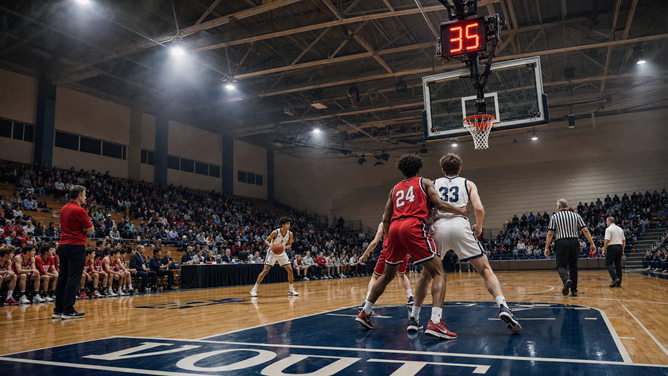
Basketball increasingly asks guards and wings to make fast reads without playing recklessly. Players have to identify switches, attack closeouts, reject screens, find weak-side shooters and recognize when a possession has lost structure.
A possession clock gives those reads a deadline.
That can reward preparation. Players who know the offense can move into secondary actions earlier. Point guards who communicate clearly can prevent teammates from drifting through a possession. Coaches can teach players to distinguish between patience and inactivity.
Late-clock offense can become a measurable practice skill instead of something that appears only in isolated end-of-quarter situations.
Texas players preparing for college basketball can benefit from exposure to different competitive structures, yet the high school game still needs to serve high school development. The value of the pilot should be judged by whether it improves decision-making, game flow and coaching evaluation rather than whether it makes UIL basketball look more like another level.
That is a higher standard than simply asking whether fans enjoy seeing a countdown above the basket.
The Road To San Antonio Still Depends On Much More Than Pace
The UIL season remains a long competitive process. Girls district certification is scheduled for February 9, 2027, followed by postseason rounds leading to state finals March 4-6. Boys district certification is February 16, with state semifinals scheduled March 6 and the boys state championships set for March 11-13 at the Alamodome in San Antonio.
No optional tournament clock will determine that postseason race by itself.
Championship teams still need half-court execution, transition defense, rebounding, free-throw shooting, depth, healthy rotations and the ability to adjust between opponents. The pilot matters more as an evaluation tool during the months that build toward those games.
A coach may discover in November that a lineup needs a second ballhandler. Another team may find that its pressure defense becomes more effective when opponents feel the clock. A young guard may learn that controlling tempo does not mean waiting until a possession is nearly gone before initiating action.
Those are development gains that can carry forward even when the shot clock is not in use.
What Texas Coaches Should Watch From The First Pilot Events
The most useful evidence will come from repeated situations rather than isolated highlights.
Coaches can watch whether average possessions actually become more organized, whether turnover rates change late in the clock, how frequently teams reach rushed attempts and whether officials and table crews handle administration smoothly. Tournament directors can compare equipment demands and staffing needs across venues.
Players will supply another form of evidence through adaptation.
If teams become comfortable with the clock after only a few games, the competitive adjustment may be smaller than expected. If late-possession mistakes remain common deep into the season, coaches may need dedicated training periods built around clock awareness.
The pilot gives Texas basketball room to test those questions without pretending the answers are already known.
That measured approach fits a state with enormous variation in school size, geography, facilities and playing styles. The 35-second clock may eventually prove valuable in more settings, or coaches may decide its best role is limited to selected events. The 2026-27 season now provides a real sample instead of a theoretical debate.
For Texas players chasing district titles and eventual trips to San Antonio, the clock itself is not the championship story. What coaches learn from it could become part of the preparation that shapes those championship runs.